
Sex trafficking often looks different than people expect
Sex trafficking often begins with trust, relationships, and everyday online spaces — not with strangers or force.
When people think of sex trafficking, they often imagine abduction or strangers. In reality, trafficking most often happens within familiar relationships and environments—both online and offline.
Understanding how trafficking actually occurs helps people recognize warning signs earlier and seek support sooner.
What the data shows:
Trafficking often begins online
The internet is a primary recruitment space for human trafficking, including online dating platforms.
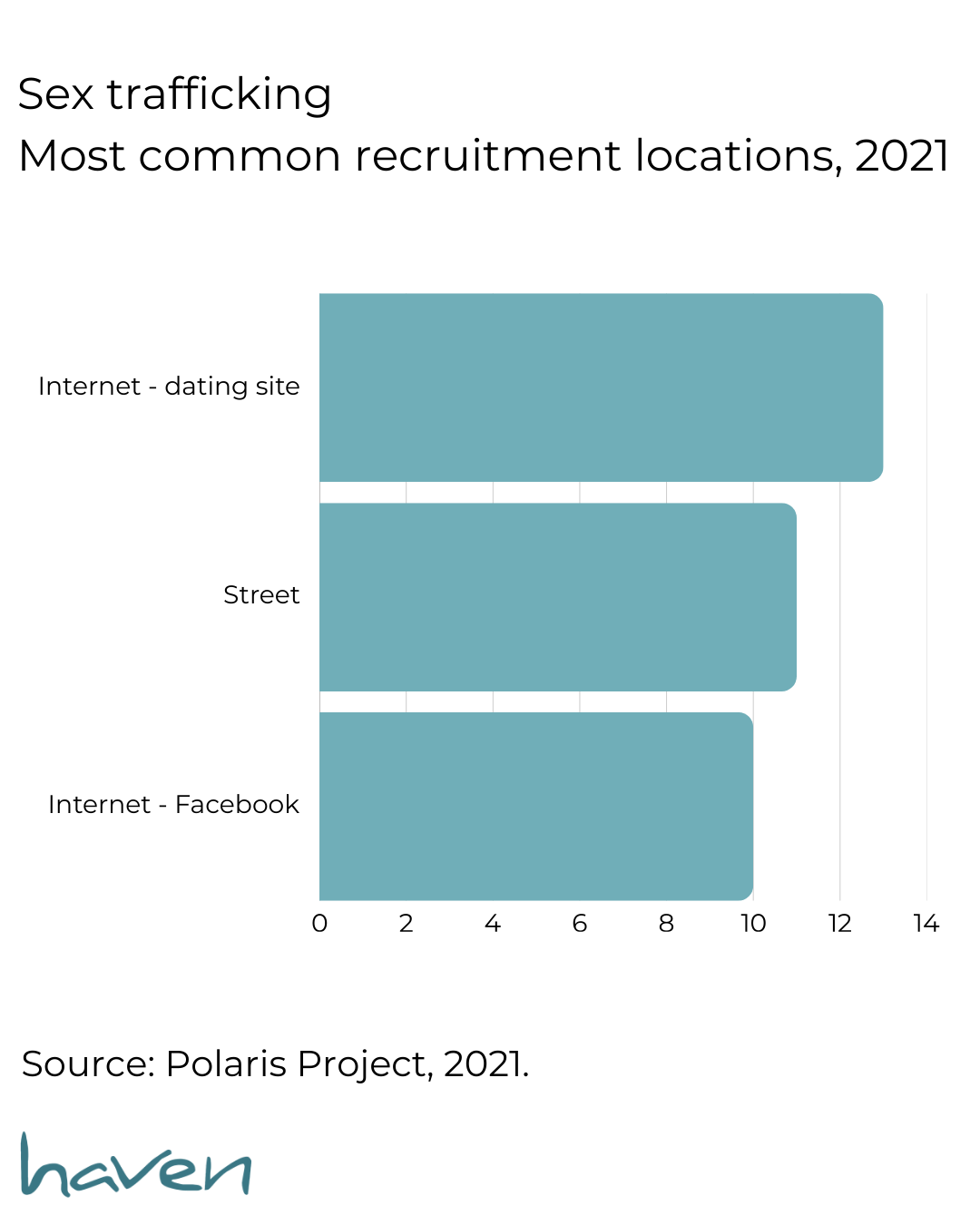
Relationships are a common entry point
In sex trafficking cases, the most common recruitment tactic is an intimate partner or “boyfriend” relationship.
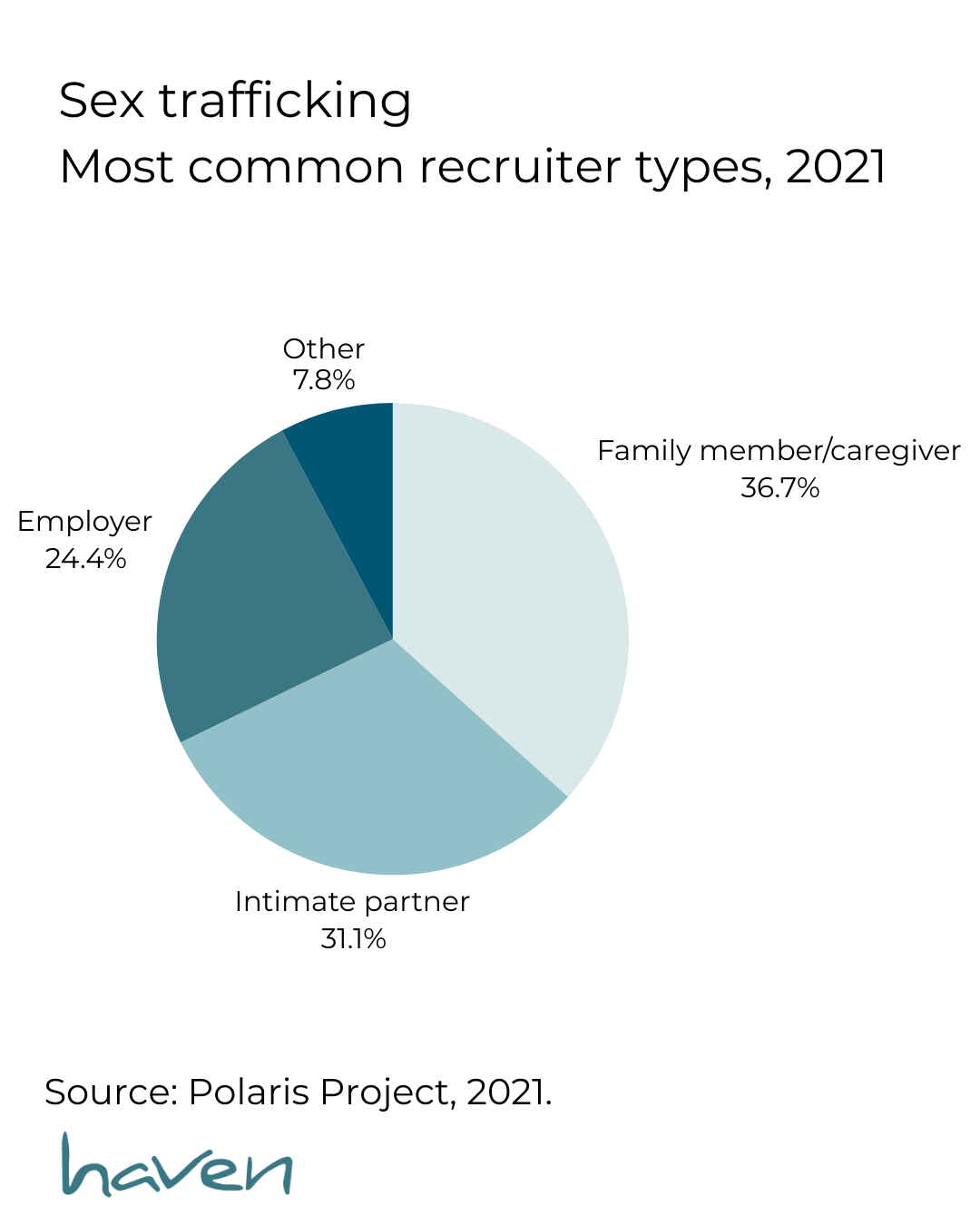
Recruitment happens within everyday networks. Traffickers most often connect with victims through people they know, including friends and family.
Why understanding this matters
When trafficking is misunderstood, people may not recognize it when it’s happening—to themselves, to someone they care about, or to someone they’re trying to help.
Knowing what trafficking can look like:
reduces stigma and shame
helps people trust their instincts
makes it easier to reach out for support
Not sure if something you’re experiencing—or seeing—could be trafficking?
This short, confidential self-assessment can help you reflect on situations that may involve exploitation. You don’t need to be certain. You don’t need proof. This is simply a tool to help you understand what you’re noticing.
You’re not alone—and help is available
If anything here feels familiar or raises questions, Haven is here. Our advocates offer confidential support, information, and options. You don’t have to label your experience, make a report, or take any next step you’re not ready for.
Haven support line: 406-586-4111
Available 24/7 | Free | Confidential
National Human Trafficking Hotline: 1-888-373-7888